

DSIP the Science
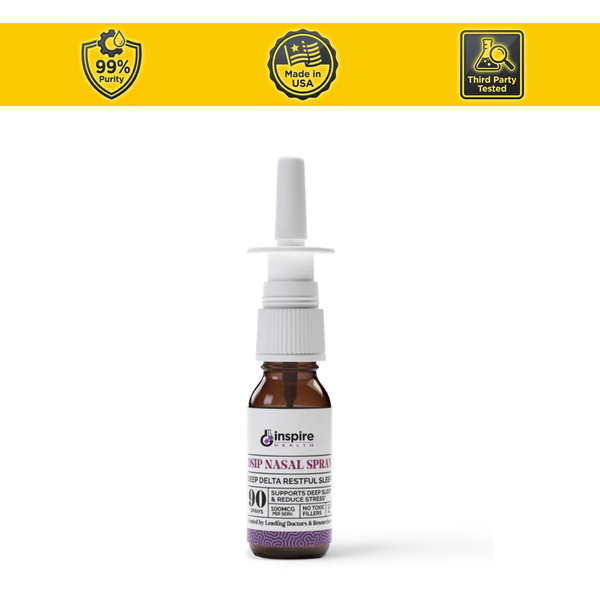
DSIP Nighttime Relaxation Spray
Why Melatonin Fails — and What Sleep Scientists Use Instead
Over 70 million Americans suffer from chronic sleep problems. The global sleep aid market is worth $78 billion. And the most popular solution — melatonin — doesn't actually fix the problem. It makes you drowsy. That's it. It does nothing to improve the quality, depth, or architecture of your sleep.
There's a reason you can take melatonin and still wake up feeling like you didn't sleep. Because you didn't. Not really. Not the kind of sleep your brain and body actually need to recover.
The sleep your body is starving for has a name: delta-wave sleep. And there's a peptide that was literally named after it.
Watch: The Sleep Peptide Science Explains
Hear a real user explain how DSIP nasal spray replaced melatonin, eliminated morning grogginess, and restored deep sleep for both her and her husband.
Key insights:
✓ Why melatonin only makes you drowsy
✓ What delta-wave sleep actually is
✓ How DSIP supports deep sleep naturally
✓ Zero grogginess — the critical difference
The 4 Stages of Sleep (and Why Only 1 Matters)
Every night, your brain cycles through four stages of sleep:
Stage 1 (N1): Light sleep. The transition between wakefulness and sleep. Lasts 5-10 minutes. Easily disrupted.
Stage 2 (N2): Moderate sleep. Body temperature drops, heart rate slows. This is where most people spend 50% of their night. It's fine, but it's not restorative.
Stage 3 (N3 — Delta Sleep): This is deep, slow-wave sleep characterized by delta brain waves. This is where your body repairs tissue, consolidates memory, restores energy, releases growth hormone, and rebuilds your immune system. This is the sleep that makes you feel rested. This is the sleep most adults aren't getting enough of.
Stage 4 (REM): Dream sleep. Important for emotional processing and creativity, but not the physical restoration stage.
The Delta Sleep Crisis
At age 25, delta-wave sleep accounts for roughly 25% of total sleep time. By age 60, it drops to about 2%. This is the single biggest reason older adults feel tired no matter how much they sleep. It's not about quantity. It's about depth. And nothing in a pharmacy aisle addresses this.
Why Melatonin Doesn't Work
Melatonin is a hormone that signals "it's time to sleep." That's all it does. It doesn't improve sleep quality. It doesn't increase time spent in delta-wave sleep. It doesn't reduce nighttime awakenings. It doesn't lower cortisol.
Studies consistently show that melatonin reduces sleep latency (time to fall asleep) by an average of just 7 minutes. Seven minutes. And the morning grogginess it causes can last hours — making it dangerous for anyone who needs to drive, operate machinery, or think clearly in the morning.
Prescription sleep aids (Ambien, Lunesta, trazodone) are worse. They force unconsciousness but actually suppress delta-wave sleep. You're unconscious but not restored. And they build dependency rapidly.
- Makes you drowsy — doesn't improve depth
- Reduces sleep latency by only 7 minutes (avg)
- Does NOT increase delta-wave sleep
- Morning grogginess for hours
- Prescription aids suppress deep sleep
- Tolerance builds — need higher doses
- Dependency risk (prescriptions)
- $15-50/month for something that barely works
- Supports actual deep delta-wave sleep
- Helps fall asleep AND stay asleep
- Increases time in restorative Stage 3
- Zero morning grogginess
- Works WITH your sleep architecture
- No tolerance buildup
- Non-habit forming
- $99.99 for 30-60 day supply of real sleep
"I'm a sleep medicine physician. I started recommending DSIP to patients who weren't responding to standard interventions. The feedback has been remarkable — particularly regarding sleep depth and morning alertness. This addresses the mechanism, not just the symptom."
Deep Sleep. Not Just Drowsiness.
DSIP Nighttime Relaxation Spray
What Is DSIP? The Science.
Delta Sleep-Inducing Peptide (DSIP) was first isolated from rabbit brain tissue in 1977 by Swiss researchers. It's a nonapeptide — a chain of nine amino acids — that the brain produces naturally to regulate sleep-wake cycles.
DSIP is named after delta waves because that's what it does: it supports the brain's ability to enter and sustain delta-wave (Stage 3) sleep — the deepest, most restorative phase of the sleep cycle.
How DSIP Works
Cortisol modulation: DSIP reduces basal corticotropin levels and prevents stress-induced cortisol release. High cortisol at bedtime is the primary driver of the "wired but tired" phenomenon. DSIP helps your stress system stand down so sleep can begin.
GABA enhancement: DSIP interacts with GABA receptors in the brain, supporting the natural calming system that enables sleep onset. Unlike benzodiazepines, it doesn't force GABA receptor activation — it supports their natural sensitivity.
Sleep architecture support: Research indicates DSIP increases time spent in slow-wave sleep (N3), reduces sleep onset latency, and minimizes nocturnal awakenings. It works with your brain's natural sleep architecture rather than overriding it.
No tolerance or dependency: DSIP does not downregulate receptors or build tolerance. Studies show consistent efficacy with long-term use — a critical distinction from prescription sleep medications.

Filtraphorix Nasal Delivery
DSIP is a peptide. Taken orally, it would be destroyed by digestive enzymes. Our Filtraphorix nasal delivery system bypasses digestion entirely, delivering DSIP directly through the nasal mucosa into systemic circulation. The nasal pathway provides rapid absorption and efficient delivery to the central nervous system.
"I've been researching sleep compounds for 15 years. DSIP is one of the most elegant solutions I've encountered — it addresses the actual mechanism of deep sleep rather than simply inducing unconsciousness. The nasal delivery makes the pharmacokinetics far superior to any oral formulation."
What to Expect
Night 1
Spray 20-30 minutes before bed. Cortisol drops, mental chatter fades, sleep onset occurs naturally. Most users report noticeably deeper sleep on the first night.
Nights 3-7
Sleep depth and duration improve consistently. Nighttime awakenings decrease. Morning alertness improves — the "fully charged" feeling most adults haven't experienced in years.
Weeks 2-4
Sleep architecture normalizes. Time in delta-wave sleep increases. Downstream benefits emerge: better daytime focus, improved mood, faster physical recovery, reduced caffeine dependence.
Month 2+
Consistent deep sleep becomes baseline. No tolerance buildup. Benefits are sustained and compound. Users report feeling years younger in terms of energy and cognitive clarity.
How to Use It
Dosage: 1 spray per nostril, 20-30 minutes before bed.
Frequency: Nightly for best results.
Storage: Room temperature. Refrigerate after opening.
Each bottle: 120 sprays — 30-60 day supply.

"I tracked my sleep with an Oura ring before and after starting DSIP. My deep sleep went from 35 minutes per night to over 90 minutes. That's not placebo. That's measurable, documented improvement."
The Bottom Line
Melatonin makes you drowsy. Ambien makes you unconscious. Neither gives you what your brain actually needs: deep, restorative, delta-wave sleep.
DSIP does. One spray. No grogginess. No dependency. The sleep your body has been missing.
Ready for Deep Sleep?
